
A fire in a cement plant, a warehouse or a parking structure does not have to bring the building down. What decides the outcome is how long the beams, columns and slabs keep carrying their load while the fire burns. That time is bought with passive fire protection: a layer that keeps heat away from the structure. In Pakistan two products are most often discussed for this, fire protection mortar and intumescent coating, and they are often confused in enquiries and even in tenders. This guide explains what each one is, which structure it is meant for, how thickness and quantity are worked out, and which documents to ask for before you buy.
Quick answer
- Fire protection mortar is a lightweight cementitious layer, sprayed 10–40 mm per layer, that insulates concrete structures. Example: Sika Sikacrete-213 F.
- Intumescent coating is a thin paint film, around 1–2 mm, that swells into an insulating char when heated. It is mainly used on structural steel. Example: Nimir ChemCoat FRC.
- Choose by substrate first, then by the fire rating (60, 90, 120 minutes or more), exposure and the tested system in the manufacturer’s documents.
- A flammability or ignitability test is not a fire-resistance rating. Ask for the test that matches your substrate and required minutes.
In this guide
Why Concrete and Steel Need Fire Protection
Steel does not burn, but it loses strength quickly as it heats up. Structural steel is commonly taken to lose around half of its strength at roughly 550 °C, a temperature an unprotected beam can reach within minutes in a fully developed fire. Thin steel sections heat fastest.
Concrete performs better, but it is not immune. In a severe fire, especially a fast hydrocarbon fire, the surface can spall: layers break off as moisture turns to steam, exposing the reinforcement. Once the rebar heats up, the beam or slab loses capacity. Tunnels, process areas, fuel storage zones and plants handling combustible material carry the highest risk.
Passive fire protection slows the temperature rise so the structure keeps its load-bearing capacity for the time the fire rating requires, giving people time to escape and fire services time to respond.

What Is Fire Protection Mortar?
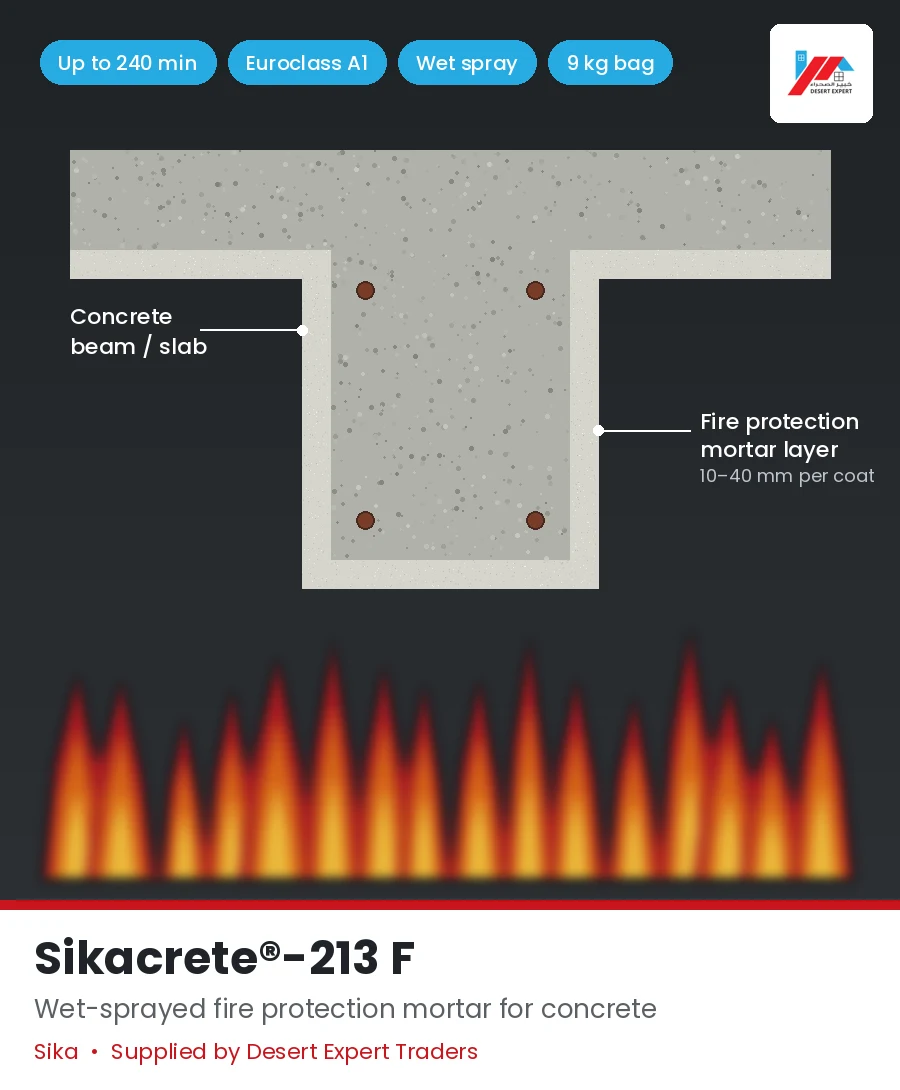
Fire protection mortar is a pre-bagged, lightweight cementitious mix that is applied in a thick layer and insulates by its low density and low thermal conductivity. It does not change during a fire; it simply keeps heat away from the surface beneath.
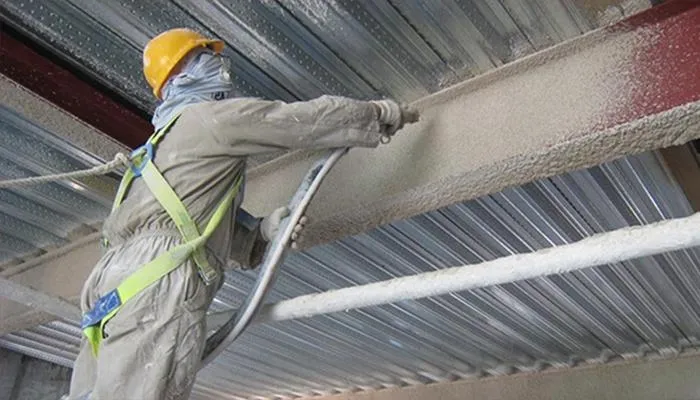
Sikacrete-213 F from Sika is a good example. According to the Sika Pakistan product data sheet (March 2025) it is a one-part, cementitious fire protection mortar for wet spray application on all types of reinforced concrete buildings and civil engineering structures, including tunnels. Its phyllosilicate aggregates are effective against the heat of hydrocarbon fires, and more than 240 minutes of fire resistance is achievable in the tested systems.
| Sikacrete-213 F | Data sheet value |
|---|---|
| Base | Portland cement, additives, phyllosilicate aggregates |
| Packaging | 9 kg bag |
| Mixing water | 8–10 L per bag |
| Consumption | ~5–6 kg/m² per 10 mm (theoretical) |
| Layer thickness | 10 mm min., 40 mm max. per layer |
| Reaction to fire | Euroclass A1 (non-combustible) |
| Fire tests listed | 3 h EN 1363-1 (RWS curve); 4 h Lachenbrand curve; UL 263 for FRP-strengthened members |
| Bonding primer | Sika MonoTop-910 N or -910 ECO |
What Is Intumescent Coating?
An intumescent coating looks like a normal thick paint when applied. When it is heated in a fire, it reacts and swells many times its original thickness into a carbon-rich char foam. That char is the insulation: it slows the heat reaching the steel beneath.
ChemCoat FRC from Nimir Chemcoats is a single-component, solvent-based intumescent fire-retardant coating. Its technical data sheet lists the substrate as metal, recommends a primer such as Chemrep ZR Primer, and gives fire retention of up to 2 hours at 1.8 mm dry film, built in three coats of about 0.65 mm. Practical coverage is 3.43 kg/m² at that thickness, packed in a 20 kg kit.

Read test reports carefully
The ChemCoat FRC SGS report available to us is an EN ISO 11925-2 ignitability test: it shows the coating does not ignite under a small flame. It is a reaction-to-fire test, not a fire-resistance (minutes) rating. The “up to 2 hours” figure comes from the manufacturer’s data sheet. Always ask which test supports the rating you need.
Fire Protection Mortar vs Intumescent Coating: Side by Side
| Fire protection mortar | Intumescent coating | |
|---|---|---|
| Example | Sikacrete-213 F (Sika) | ChemCoat FRC (Nimir) |
| Main substrate | Reinforced concrete, tunnels, FRP-strengthened concrete | Structural steel (metal) |
| How it protects | Thick, lightweight insulating layer | Thin film swells into insulating char when heated |
| Typical thickness | 10–40 mm per layer, built to the specified total | About 1.8 mm dry film for up to 2 hours (manufacturer data) |
| Appearance | Textured or trowelled render finish | Smooth paint finish, can be topcoated |
| Weight added | Higher (~0.6 kg/L hardened density, but thick) | Very low |
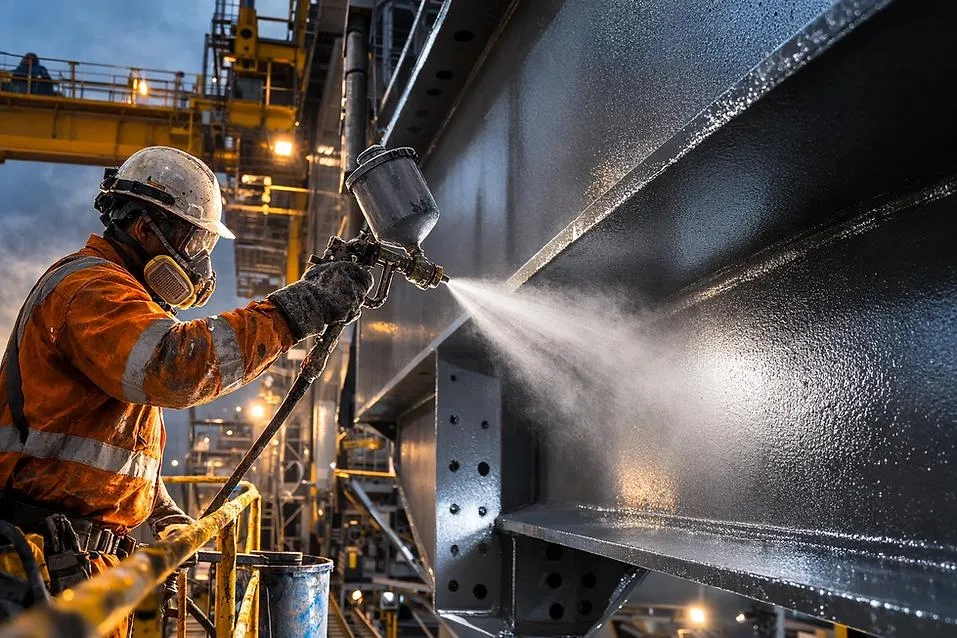
| Application | Wet-spray machine, mesh where required, trowel finish | Brush, roller or airless spray, several coats |
| Durability | Robust, cement-based; surface sealer for freeze–thaw or wear | Needs protection from damage and weather as per data sheet |
| Typical projects | Cement plants, tunnels, parking structures, concrete process areas | Steel buildings, warehouses, pipe racks, mezzanines |
Which One Should You Use for Your Structure?
Concrete beams, columns, slabs and walls
Use a fire protection mortar that is designed and tested for concrete, such as Sikacrete-213 F. Intumescent paints are generally designed and tested for steel; do not use one on concrete unless the manufacturer confirms in writing that it is approved for concrete at the rating you need.
Structural steel beams and columns
Intumescent coatings such as ChemCoat FRC are the usual choice where a neat painted finish and low weight matter. For very high ratings or harsh exposure, engineers may also specify cementitious sprays made for steel; Sikacrete-213 F itself is a concrete product.
Tunnels and hydrocarbon fire zones
Fires involving fuel heat up far faster than ordinary building fires. Ask for products tested to the hydrocarbon or tunnel (RWS) curve. Sikacrete-213 F lists a 3-hour EN 1363-1 test on the RWS curve.
Outdoor and humid exposure
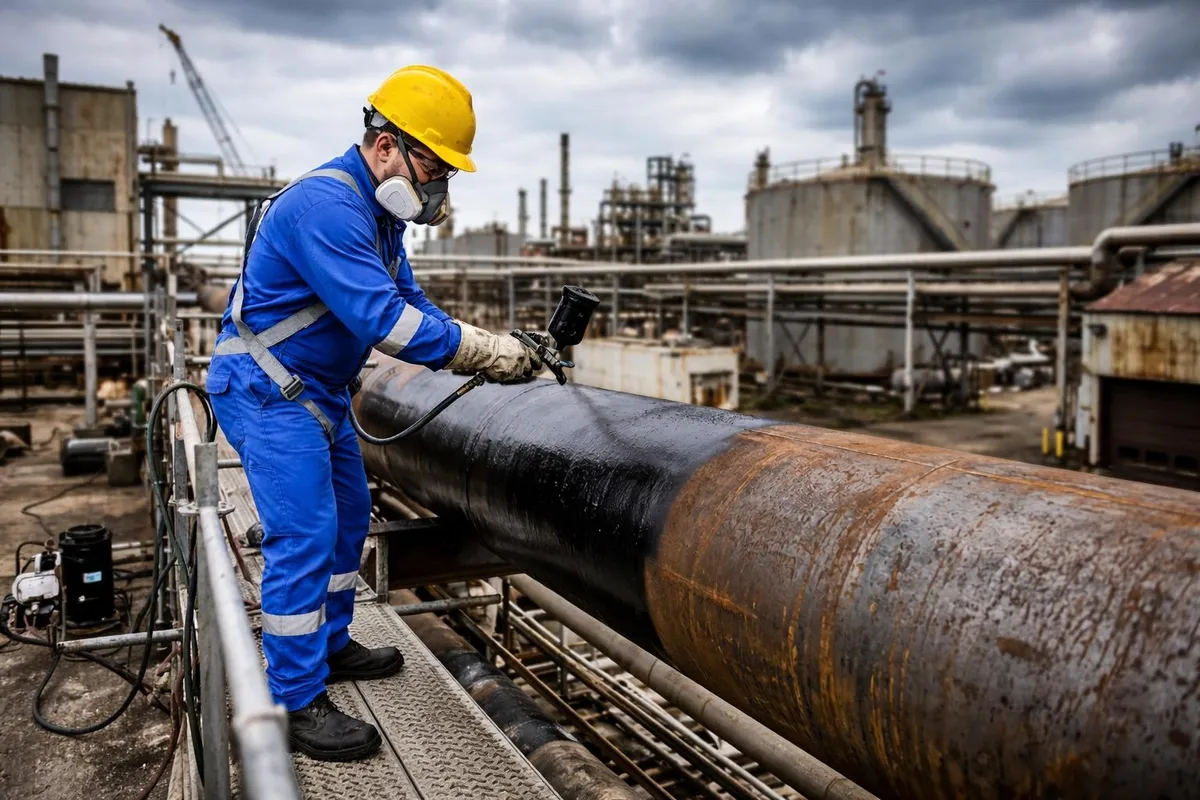
Check the data sheet for exterior use and any required sealer or topcoat. Many Pakistani plants combine heat, dust, monsoon humidity and sun, which affects which product and finish will last.
Fire Ratings and Test Terms Explained
- Fire resistance (minutes): how long a protected element keeps performing in a standard fire test, for example R60, R90 or R120. This is what building and plant specifications ask for.
- Fire curve: the temperature-time curve used in the test. The standard (cellulosic) curve represents ordinary building fires; hydrocarbon and RWS curves represent much faster, hotter fuel and tunnel fires.
- Reaction to fire: how a material itself behaves in fire, for example Euroclass A1 (non-combustible) or an EN ISO 11925-2 ignitability result. Useful, but it is not a minutes rating.
- Tested system: the rating applies only to the substrate, thickness, primer, mesh and section sizes that were tested. Change any of them and the rating may not apply.
How to Calculate Quantity (Worked Examples)
Always take the thickness for your rating from the manufacturer’s thickness table or technical department. The examples below only show the method.
Example 1: Fire protection mortar on 535 m² of concrete
- Assume the specified thickness is 20 mm (illustration only).
- Consumption: ~5–6 kg/m² per 10 mm, so 10–12 kg/m² at 20 mm.
- Total: 535 m² × 10–12 kg = 5,350–6,420 kg.
- Bags: 5,350–6,420 ÷ 9 kg = about 595–714 bags, before wastage and surface variation.
Example 2: Intumescent coating on 100 m² of steel
- For up to 2 hours the data sheet gives 1.8 mm dry film at 3.43 kg/m².
- Total: 100 m² × 3.43 kg = 343 kg.
- Kits: 343 ÷ 20 kg = 17.2, so 18 kits, plus primer and an allowance for losses.
Tip for steel
For steel, the area to coat is the surface area of the sections (flanges and web), not the floor area. Section size also changes the required thickness: heavier sections need less. A structural engineer or the manufacturer should confirm both.
Send us your area, substrate and required rating, and we will work out the quantity and send a written quotation.
WhatsApp Your Project DetailsHow Each System Is Applied
Fire protection mortar (Sikacrete-213 F)
- Prepare sound concrete with a roughness above 2 mm, for example by high-pressure water blasting.
- Pre-dampen to saturated surface-dry and apply the bonding primer.
- Fix light galvanised or stainless steel mesh where required.
- Mix 8–10 L of water per 9 kg bag and wet-spray 10–40 mm per layer.
- Let each layer harden before the next, finish with a trowel or float, and cure immediately.
Intumescent coating (ChemCoat FRC)
- Clean and prime the steel with the recommended primer.
- Apply by brush, roller or airless spray in coats of about 0.65 mm dry film.
- Respect the recoat interval (24 hours at 25 °C) and the humidity and dew-point limits.
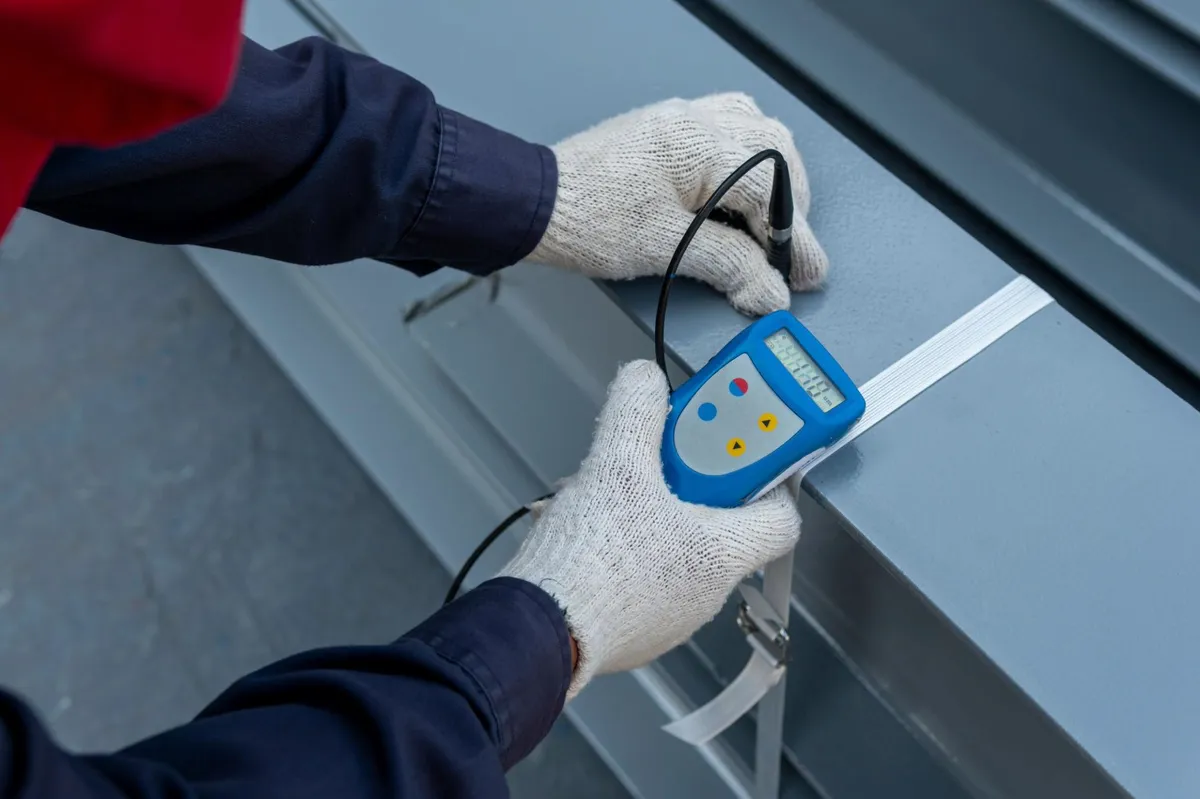
- Measure dry film thickness on each member until the specified total is reached.
- Apply a compatible topcoat if the data sheet or exposure requires it.
For steel preparation and painting, see our steel structure painting service in Islamabad and Rawalpindi.
Common Mistakes to Avoid
- Using a steel intumescent paint on concrete without written approval for that substrate.
- Treating an ignitability or flame-spread test as a fire-resistance rating.
- Estimating quantity from floor area instead of the actual surface to be protected.
- Skipping the bonding primer or mesh in mortar systems.
- Applying intumescent coating too thin in one area and too thick in another, with no DFT readings.
- Mixing products from different systems that were never tested together.
Documents to Ask for Before You Buy
- Current technical data sheet and safety data sheet.
- Fire test report or certificate for your substrate and your rating (minutes and fire curve).
- Thickness table or a written thickness recommendation for your members.
- Method statement and the primer, mesh and topcoat to be used.
- Batch numbers and manufacturing dates on delivery.
Fire Protection Products from Desert Expert Traders
Desert Expert Traders (Pvt) Ltd, Islamabad, supplies Sikacrete-213 F fire protection mortar for concrete and ChemCoat FRC intumescent coating for steel, alongside Nippon Paint protective coatings. We share data sheets, help work out quantities, and supply to project sites across Pakistan. See the full industrial coatings range.
Beyond fire protection, we also supply protective coatings for tanks, floors and steel structures, including epoxy tank linings and two-pack epoxy systems.

Frequently Asked Questions
What is the difference between fire protection mortar and intumescent coating?
Fire protection mortar is a thick cementitious layer, typically 10–40 mm per layer, that insulates concrete. Intumescent coating is a thin paint film, around 1–2 mm, that swells into an insulating char when heated and is mainly used on steel.
Can intumescent paint be used on concrete?
Only if the manufacturer confirms in writing that the product is tested and approved for concrete at the required rating. Most intumescent coatings, including ChemCoat FRC, list metal as the substrate.
What is Sikacrete-213 F used for?
It is a wet-sprayed cementitious fire protection mortar for reinforced concrete buildings, civil structures and tunnels, and for concrete strengthened with Sika FRP systems.
How thick should fire protection mortar be for 90 minutes?
It depends on the tested system, the member and the fire curve. Take the thickness from the manufacturer’s thickness table or technical department for your project.
How many bags of Sikacrete-213 F do I need?
Multiply the area by about 5–6 kg/m² for every 10 mm of thickness, then divide by 9 kg per bag and add wastage. For example, 100 m² at 20 mm needs about 1,000–1,200 kg, or 112–134 bags.
How long does ChemCoat FRC protect steel?
The Nimir data sheet gives fire retention of up to 2 hours at 1.8 mm dry film thickness. Confirm the thickness for your steel sections with the manufacturer.
Is a flammability test the same as a fire rating?
No. Tests such as EN ISO 11925-2 measure how easily a material ignites. A fire rating in minutes comes from a fire-resistance test on a protected structural element.
Where can I buy fire protection mortar in Pakistan?
Desert Expert Traders in Bahria Town Phase 8, Islamabad, supplies Sikacrete-213 F across Pakistan. WhatsApp +92 323 1525249 or email info@dexsafety.net for a quotation.
Do you also apply the fire protection?
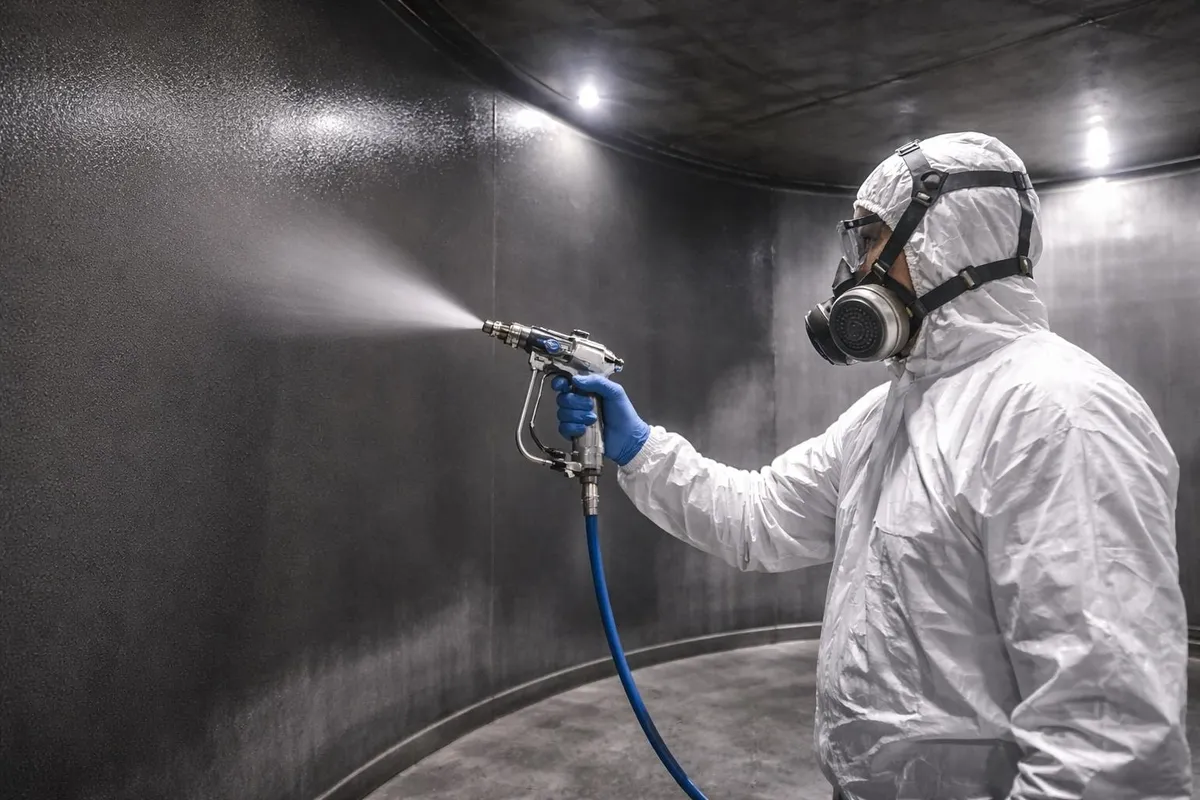
We supply the materials with data sheets and quantity support. Application is done by trained applicators with spray equipment; ask us when you send your project details.
Conclusion
The right fire protection starts with one question: is the structure concrete or steel? For concrete, a tested cementitious fire protection mortar such as Sikacrete-213 F is the natural choice. For steel, an intumescent coating such as ChemCoat FRC gives a slim, painted finish. In both cases, the thickness, primer and test report must match your substrate and required rating.
PROJECT ENQUIRY
Need fire protection for concrete or steel?
Send us the substrate, area in m², fire rating required and site location. We will propose the right product, work out the quantity and send a written quotation with the data sheet.
WhatsApp for a Quotation Industrial Coatings Range Request Data Sheet