
Bathroom doors in Pakistan have a hard life. Daily steam from hot showers, splashing water, wet floors, monsoon humidity and termites. That is why the bathroom door is usually the first door in a house to swell, peel or rot. This guide compares the five common bathroom door materials sold in Pakistan, so you can choose a door that will still look and close properly in ten years.
Quick answer
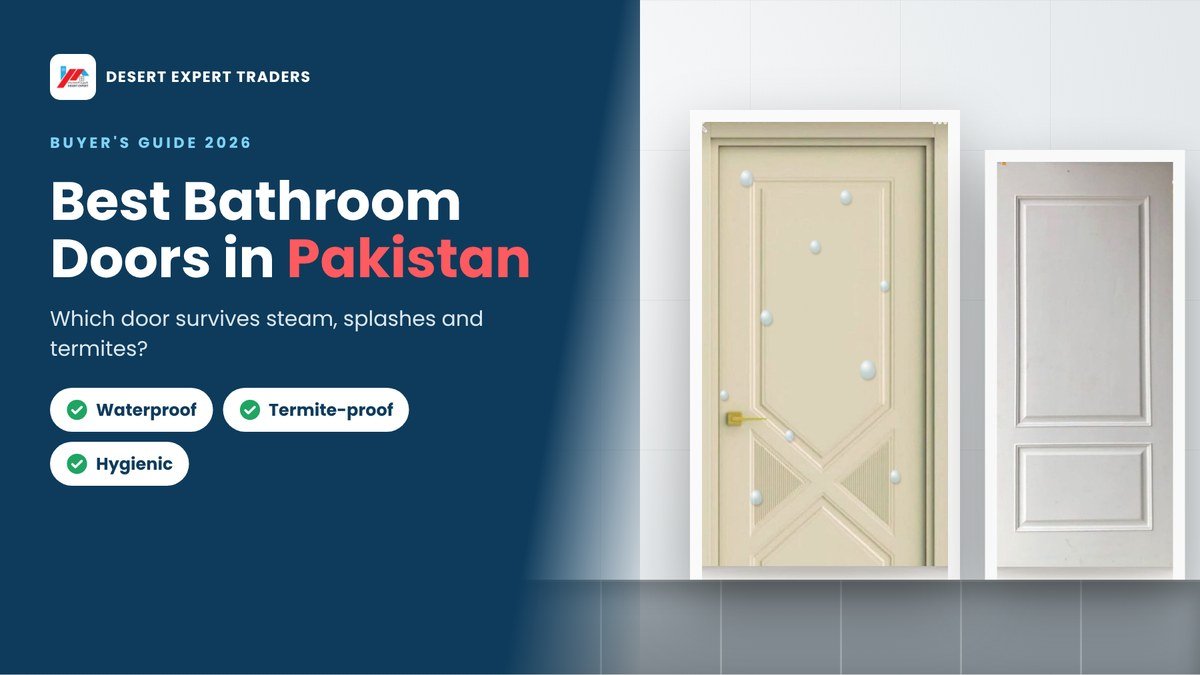
For most homes, the best bathroom doors in Pakistan are fiber (FRP) doors on HDPE frames. They are fully waterproof, termite-proof, strong and available in many designs. PVC doors are the cheapest waterproof option but feel light and can crack. Avoid MDF and ordinary flush doors in bathrooms, because they swell and peel quickly.
Why bathroom doors fail so quickly
Most bathroom doors do not fail because of bad luck. They fail because of three things that happen every day:
- Water at the bottom edge. Floors are washed, water sits at the threshold, and the bottom of a wooden or MDF door soaks it up. It swells, the laminate lifts and the door starts to rub.
- Steam and humidity. Hot showers fill the room with moisture. Wood-based doors absorb it, warp and stop closing properly, especially after the monsoon.
- Termites. Bathrooms are damp, which termites love. They often enter through a wooden frame (chowkhat) and work their way into the door.
So the right bathroom door is one that does not absorb water and gives termites nothing to eat, and it should sit on a frame that does the same.
The 5 bathroom door options in Pakistan, compared
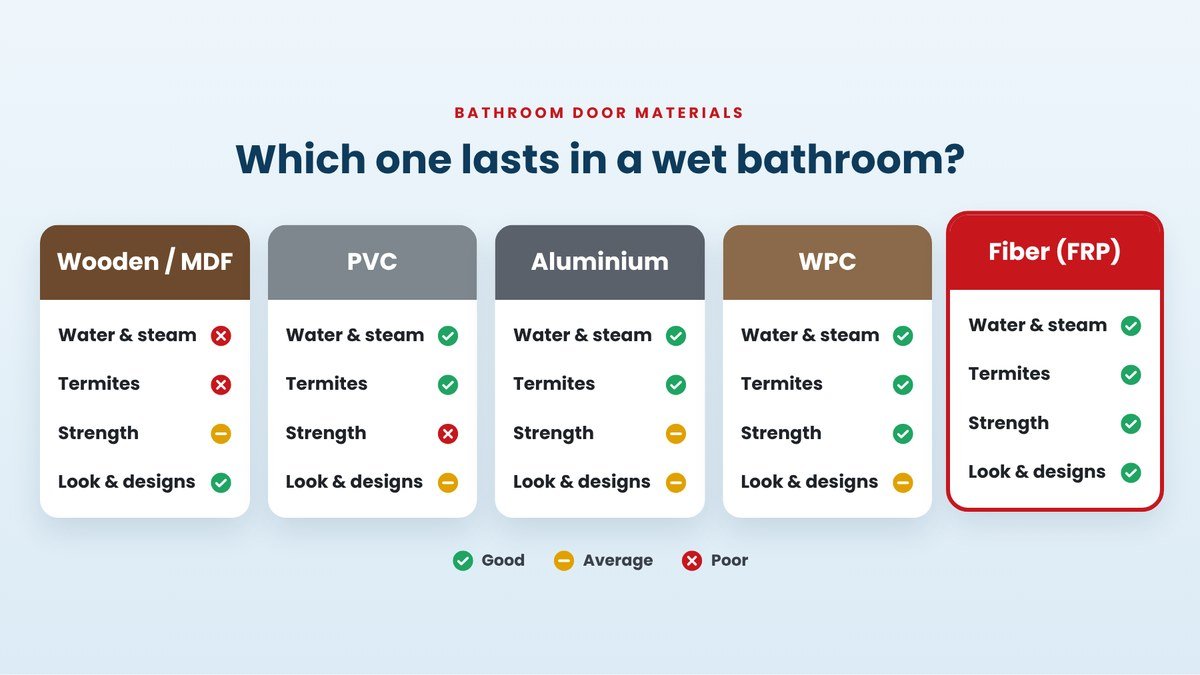
| Material | Water & steam | Termites | Strength | Look & designs | Cost (general) |
|---|---|---|---|---|---|
| Wooden / MDF | Poor – swells, peels, delaminates | High risk | Medium | Good, many finishes | Cheapest at first, but often replaced |
| PVC | Good | Termite-proof | Low – light, hollow, can crack or bend | Basic, limited designs | Low |
| Aluminium | Good | Termite-proof | Medium | Plain, commercial look | Medium |
| WPC | Good | Termite-proof | Good, heavier | Plain to moderate | Medium to high |
| Fiber (FRP) | Excellent – fully waterproof | Termite-proof | Good, with reinforced core | Wide range: plain, white, 3D, carved | Medium – long life, little upkeep |
1. Wooden and MDF doors
Still the most common, mainly because they are cheap and look familiar. But MDF and particle board swell as soon as they get wet, and flush doors open up at the edges. Solid wood holds up better but needs regular polish and termite treatment. For bathrooms, this is usually the option people regret.
2. PVC doors
PVC doors are waterproof, termite-proof and the cheapest bathroom door you can buy. The trade-off is strength: most are thin and hollow, so they can crack, bend or feel flimsy, and the design choice is limited. They are a reasonable budget choice for servant quarters or rental units.
3. Aluminium doors
Aluminium doors do not rot and are common in offices and commercial washrooms. They are practical but look plain and industrial, and many people do not like them inside a home.
4. WPC doors
WPC (wood plastic composite) doors are solid, water-resistant and termite-proof. They are a good option, though usually heavier and with fewer decorative designs.
5. Fiber (FRP) doors
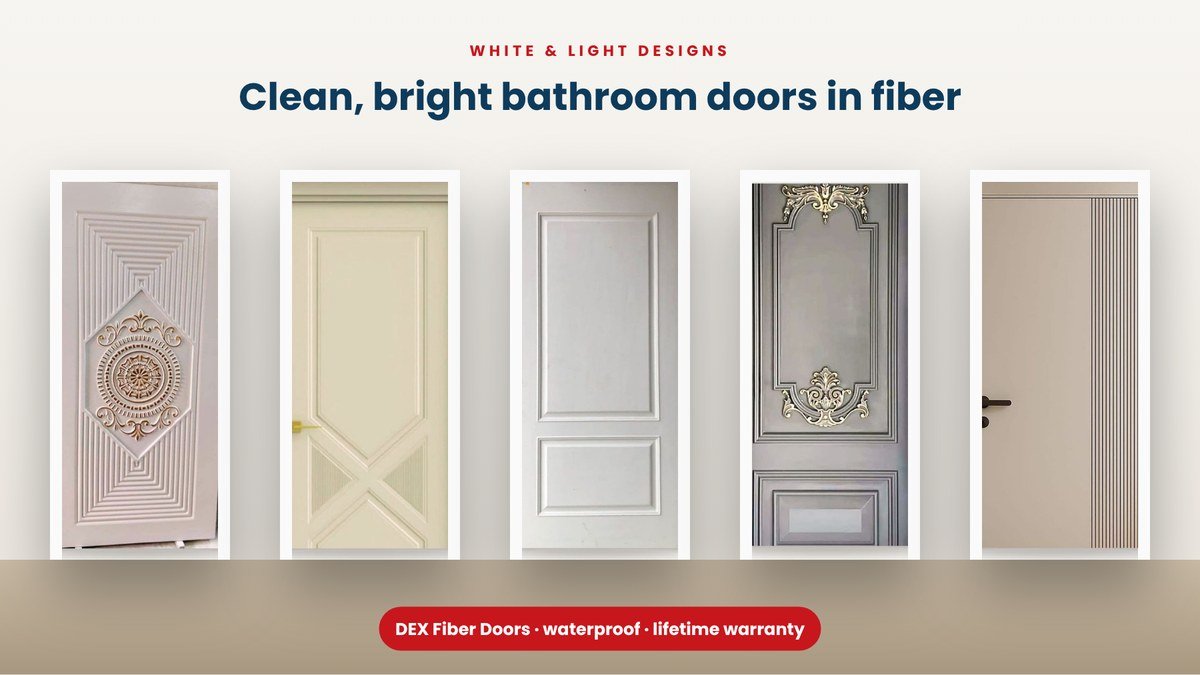
Fiber doors are made from glass fibre and resin, with a reinforced core. They are fully waterproof, cannot rot, are termite-proof, and are light enough not to strain the hinges. They also come in a wide range of looks, from plain white to 3D and carved designs, so the bathroom door can match the rest of the house. That combination is why fiber is the material we recommend for most bathrooms.
Don’t forget the frame
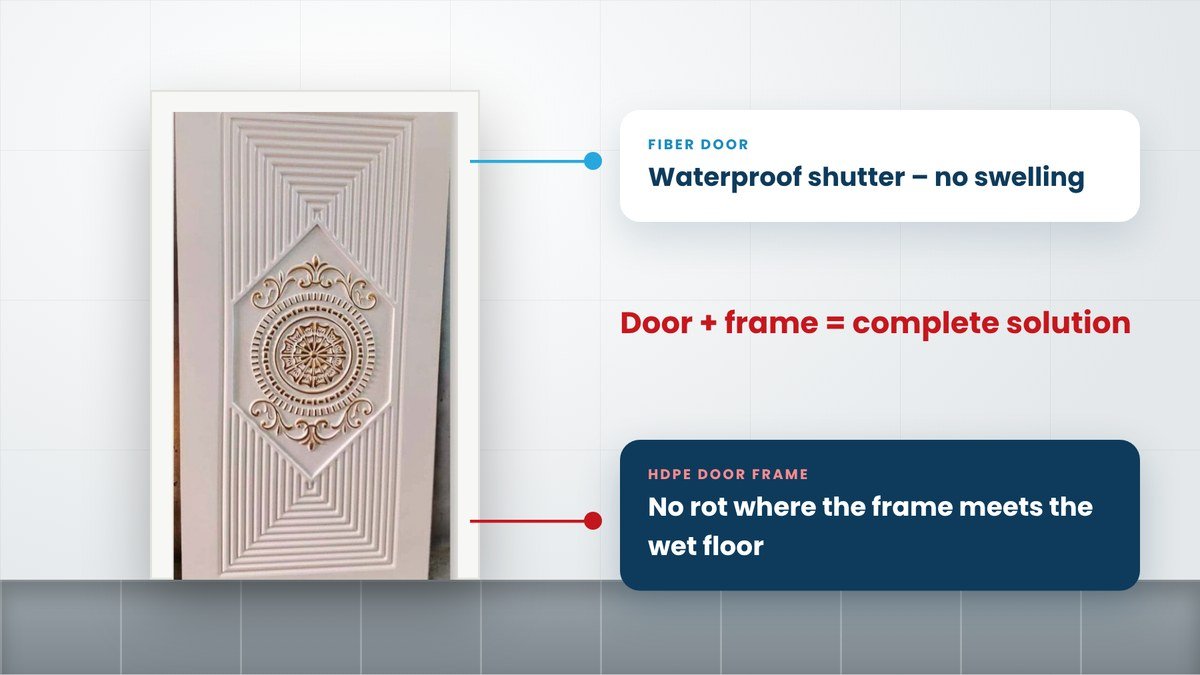
Many people change the door and keep the old wooden chowkhat. Six months later the frame is rotting at the floor and the problem is back. The frame touches the wet floor and the wall, so it needs to be waterproof too. HDPE door frames are made from high-density plastic: they do not absorb water, cannot rot and are termite-proof. A fiber door on an HDPE frame is a complete, long-term solution.
Bathroom door buying checklist
- Waterproof material – not MDF, particle board or a plain flush door.
- Termite-proof door and frame – ask what the frame is made of.
- Solid feel – knock on it; it should not sound hollow and thin.
- Size – common bathroom door sizes are around 2.5 ft x 7 ft, but measure your opening before ordering.
- Ventilation – if the bathroom has no window or exhaust fan, ask about a louvre or vent option.
- Warranty in writing and professional installation with proper sealing at the bottom.
Frequently asked questions
Which door is best for a bathroom in Pakistan?
For most homes, a fiber (FRP) door on an HDPE frame. It is waterproof, termite-proof, strong and available in designs that suit a modern home.
Is PVC or fiber better for bathroom doors?
Both are waterproof. PVC is cheaper but lighter and less strong. Fiber is stronger, feels more solid and has many more designs, so it lasts longer and looks better.
Can a wooden door be used in a bathroom?
Solid wood can be used if it is sealed and maintained, but MDF and flush doors are not recommended. They swell and peel in wet areas.
Do fiber bathroom doors need maintenance?
Very little. Wipe them with a damp cloth. They need no polish or paint, and water does not damage them.
Do I need to change the frame too?
If your current frame is wooden and the bathroom floor gets wet, yes. Fitting an HDPE frame at the same time prevents rot and termites at the floor.
MADE IN PAKISTAN · LIFETIME WARRANTY
Waterproof bathroom doors from DEX
Desert Expert Traders manufactures DEX fiber doors in Gujranwala and supplies matching HDPE door frames. Waterproof, termite-proof and rot-proof, with a lifetime warranty, installation in Islamabad and Rawalpindi and delivery across Pakistan. Send us your door sizes for a free quotation.
WhatsApp for a Quotation See All Door Designs HDPE Frames
Also read: Fiber Doors vs Wooden Doors: Which Is Better for Pakistani Homes?