
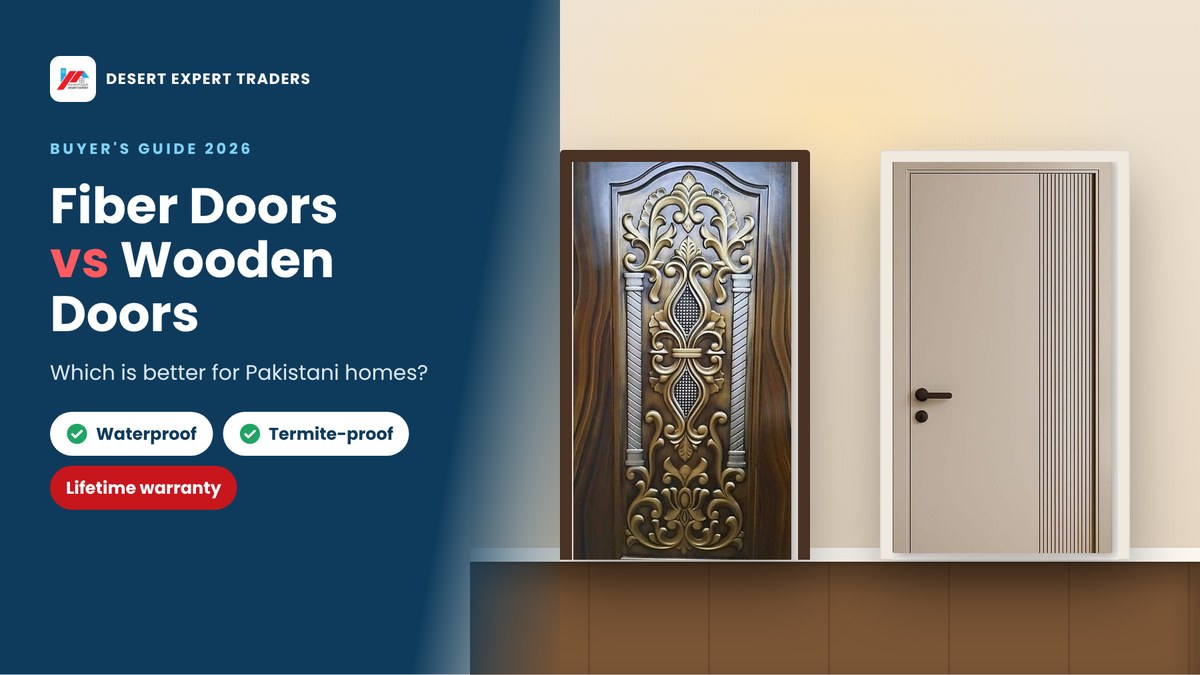
Fiber doors vs wooden doors: choosing doors for a new house or a renovation in Pakistan usually comes down to one question: fiber or wood? Wood has been the tradition for generations. Fiber (FRP) doors are now in more and more homes, offices and hospitals. Each has real strengths. This guide compares them honestly in Pakistani conditions: monsoon humidity, termites, summer heat and daily heavy use. It also shows which door suits which room.
Quick answer
Use fiber doors wherever there is water, moisture or termite risk: bathrooms, kitchens, laundry areas, rooftops, servant quarters, basements and most interior rooms. Choose solid wood mainly for the main entrance, if you want a heavy, traditional, carved look and are ready to maintain it. Many smart builders now use both: wood at the front door, fiber everywhere else.
What is a fiber door?
A fiber door, also called an FRP door (Fibre Reinforced Plastic), is made from layers of glass fibre and resin, moulded into a door panel and finished with a smooth, painted or wood-grain surface. Good-quality fiber doors have a reinforced inner core, so they feel solid and don’t flex like a cheap hollow door. The material doesn’t absorb water, can’t rot, and gives termites nothing to eat.
What counts as a “wooden door” today?
In the Pakistani market, “wooden door” covers three very different products:
- Solid wood doors (deodar, kail, ash, oak, partal and others). Strong and beautiful, but expensive. They also need seasoning, polishing and regular care.
- Flush doors (a wooden frame with plywood or veneer skins). Common and affordable, but the edges and core are vulnerable to water.
- MDF / particle-board doors. The cheapest option, but they swell quickly when they get wet. This is the main reason many bathroom doors fail within a few years.
Most comparisons below are against flush and MDF doors, because that is what most houses actually get. Solid wood is discussed separately.
Side-by-side comparison
| Factor | Fiber (FRP) door | Flush / MDF wooden door | Solid wood door |
|---|---|---|---|
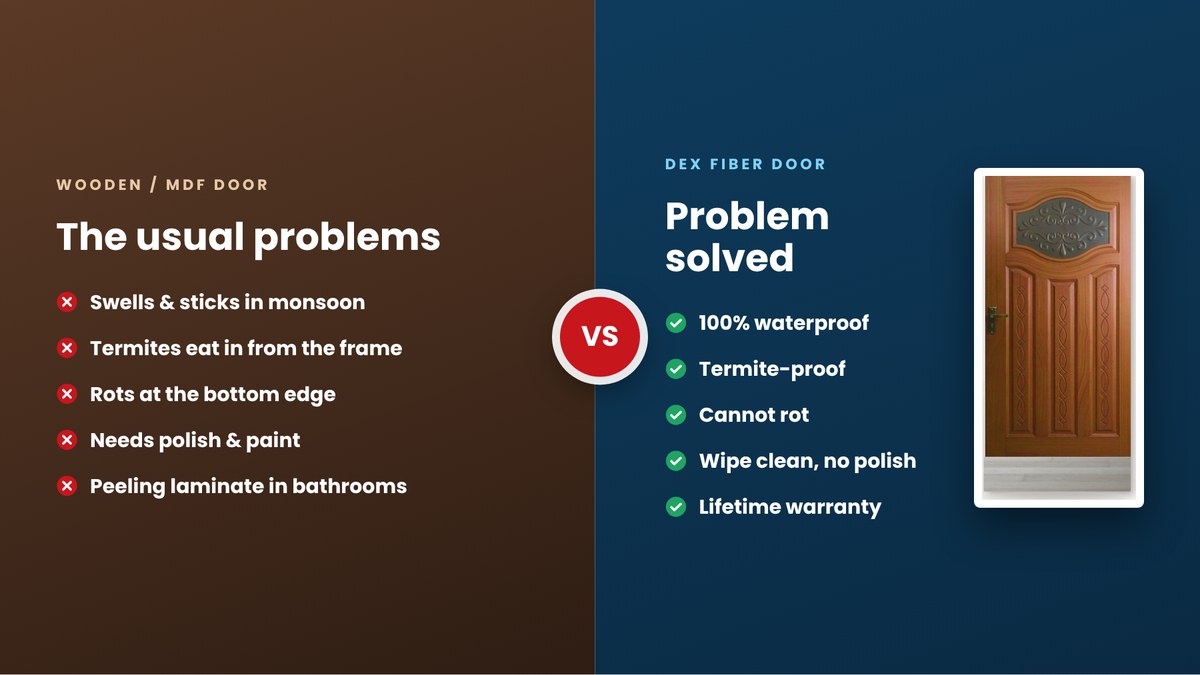
| Water & humidity | Fully waterproof. No swelling. | Swells, peels and delaminates. | Can warp and crack without polish. |
| Termites | 100% termite-proof. | High risk. | Risk unless treated. |
| Rot & fungus | Cannot rot. | Rots at the bottom edge. | Can rot in damp areas. |
| Maintenance | Wipe clean. No polish needed. | Paint and repairs needed. | Regular polish or varnish. |
| Weight | Light. Easy on hinges. | Medium. | Very heavy. |
| Security / strength | Good for interior doors. | Low to medium. | Best for main entrance. |
| Hygiene | Non-porous. Easy to disinfect. | Absorbs moisture and dirt. | Porous unless sealed. |
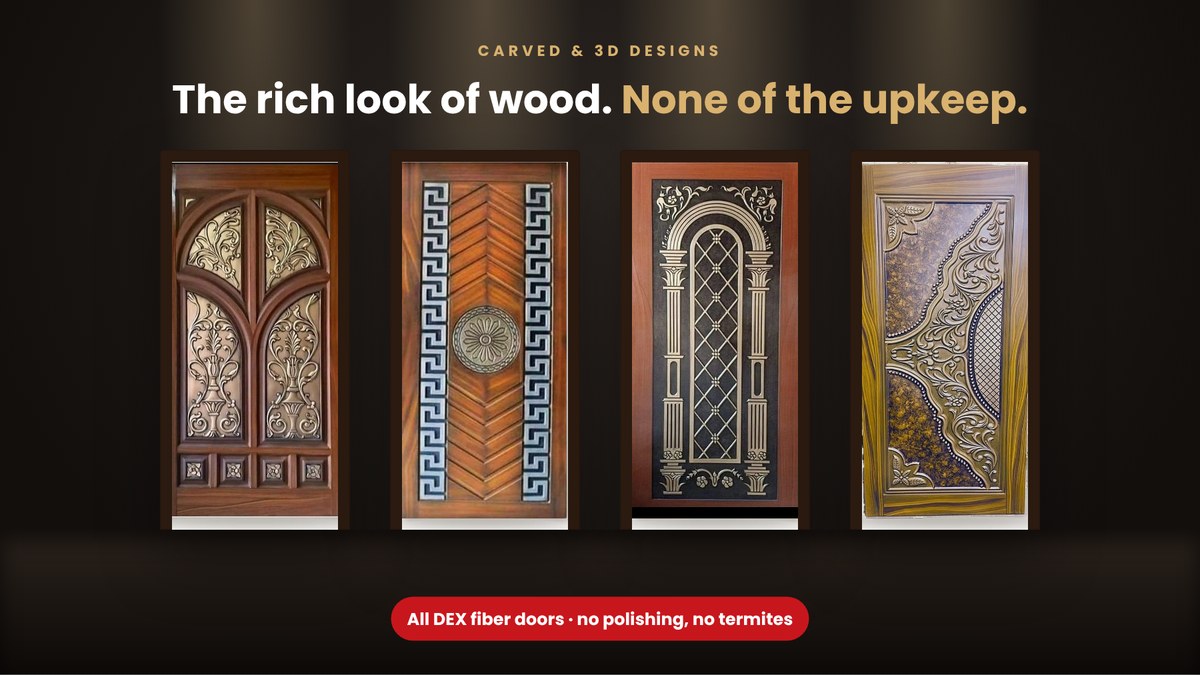
| Look | Modern. Many colours and 3D designs. | Plain. | Premium, traditional, carved. |
| Cost over 10 years | Low. Usually fit and forget. | Often replaced in wet areas. | High upfront plus upkeep. |
The biggest problem with wooden doors in Pakistan: water and termites
If you have lived in a Pakistani house for a few years, you’ve probably seen it: a bathroom door that won’t close after the monsoon, a swollen bottom edge with the laminate peeling off, or small holes and mud tracks where termites have eaten in from the frame. These problems aren’t bad luck. They happen because wood and wood-based boards absorb moisture, and termites are widespread across the country, from Karachi to Islamabad.
Fiber doors solve both problems at the material level. There is nothing for water to soak into and nothing for termites to eat. That’s why they are now standard in hospitals, schools, washrooms and industrial buildings, where doors are wet-cleaned every day.
Where fiber doors are the clear winner
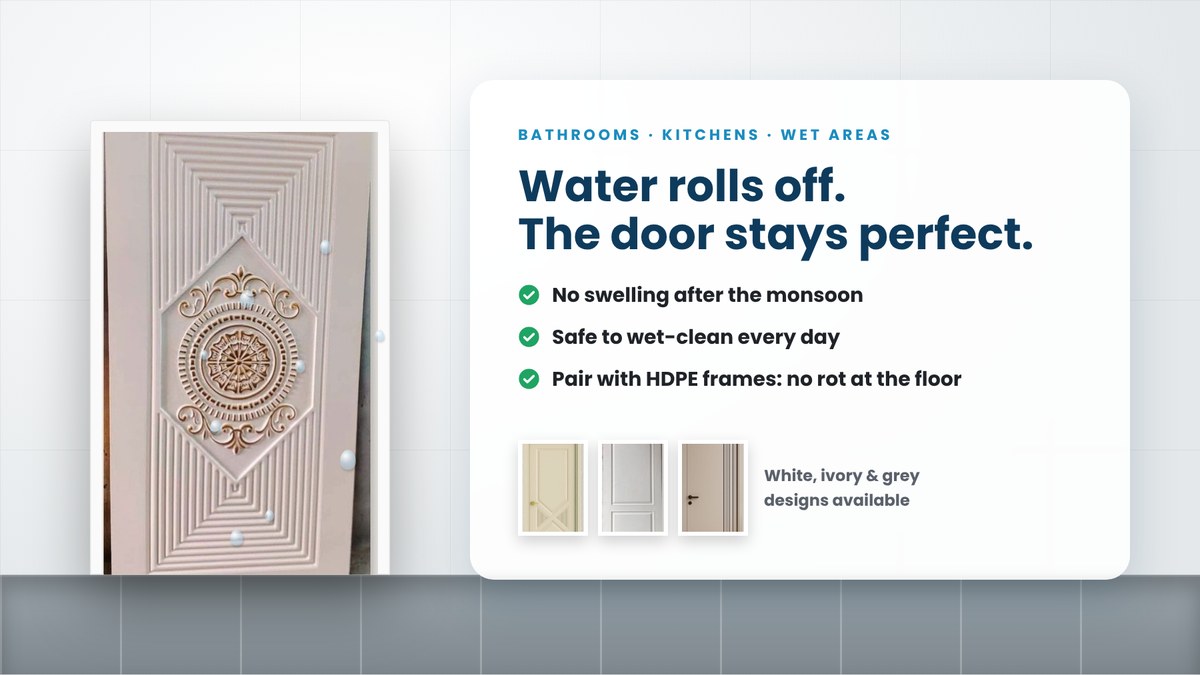
- Bathrooms and washrooms: constant steam and splashing.
- Kitchens: humidity, oil and frequent cleaning.
- Rooftop rooms, store rooms and servant quarters: exposed to rain and heat.
- Basements and ground floors: rising damp and termites.
- Hospitals, clinics and schools: hygiene and heavy daily use.
- Rental properties: low maintenance between tenants.
- Bedrooms and interior rooms: modern look and no polishing ever.
Where wood still makes sense
We’ll be honest: a good solid wood door is still the traditional choice for the main entrance. It is very heavy, very strong and can be carved into grand designs. If your budget allows and you are happy to polish it every year or two, it’s a fine choice for the front of the house. For the rest of the house, the case for wood is much weaker.
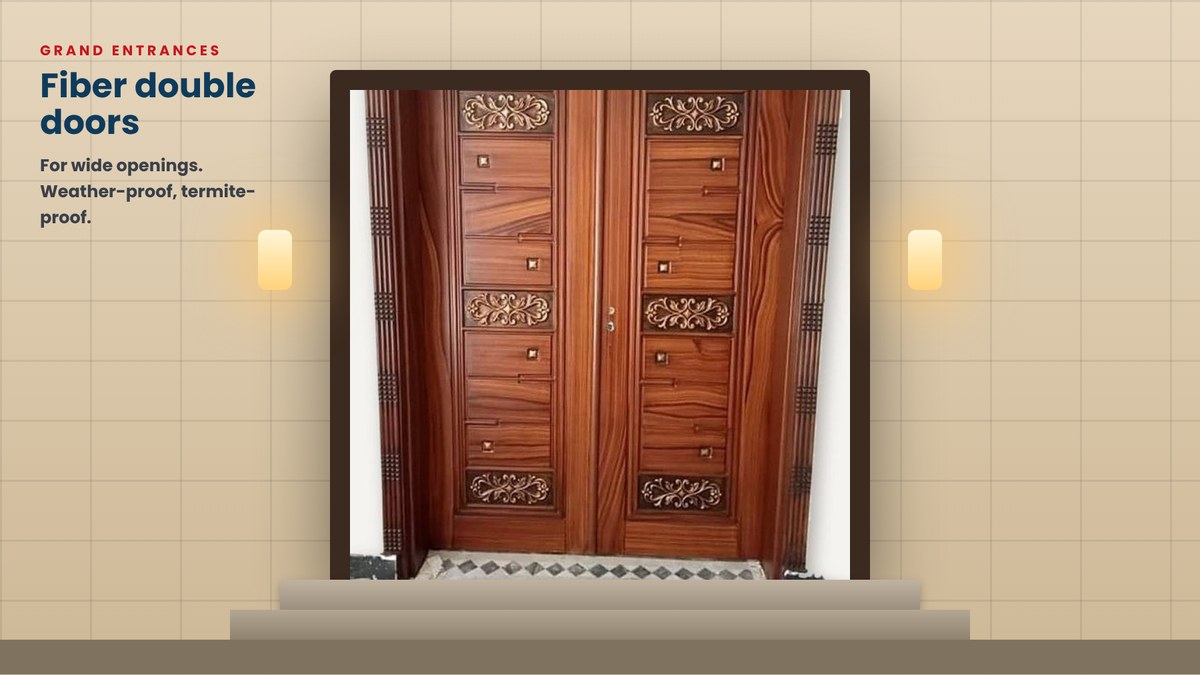
If you want the grand look without the upkeep, fiber double doors are also available for wide openings and entrances.
Don’t forget the frame
A waterproof door on a wooden chowkhat (frame) only solves half the problem. In bathrooms, the frame is usually the first thing to rot, because it touches the wet floor and the wall. Termites also often enter through the frame. For a complete solution, pair fiber doors with HDPE door frames, which are also waterproof, termite-proof and rot-proof.
How to choose a good fiber door: 6-point checklist
- Solid inner core. Knock on the door. It should sound solid, not hollow and drum-like.
- Thickness. Ask for the panel thickness and compare between suppliers.
- Finish. The surface should be smooth, with even colour and no air bubbles.
- Hardware support. Check that the door has reinforced areas for hinges and locks.
- Warranty. Ask for the warranty in writing.
- Installation. Good fitting matters as much as the door. Ask if installation is included.
Frequently asked questions
Are fiber doors strong enough?
Yes, for interior use. Good-quality fiber doors with a reinforced core handle daily slamming, children and heavy use easily. For the main entrance, many homeowners still prefer solid wood or steel for extra security.
Do fiber doors look cheap?
Not any more. Modern fiber doors come in wood-grain finishes, solid colours and 3D panel designs that look premium, and many visitors can’t tell the difference.
Can fiber doors be used in bathrooms?
Bathrooms are where fiber doors make the most sense. They can be splashed and wet-cleaned every day without swelling or peeling.
Do fiber doors get damaged by sunlight or heat?
Quality FRP doors handle Pakistani summer temperatures well. For doors in direct, all-day sunlight, ask your supplier about the surface finish and colour, because light colours stay cooler.
How long do fiber doors last?
Because they can’t rot, swell or be eaten by termites, a well-made fiber door can last for decades. DEX fiber doors come with a lifetime warranty.
MADE IN PAKISTAN · LIFETIME WARRANTY
DEX Fiber Doors and HDPE Frames
Desert Expert Traders manufactures DEX fiber doors in Gujranwala, with 17 designs from plain to 3D panel styles, and supplies matching HDPE door frames. All are waterproof, termite-proof and rot-proof, with a lifetime warranty, installation in Islamabad and Rawalpindi and delivery across Pakistan.